🏋️ Try Hello Fit for free — Book a complimentary showround

How to Write Your Own Workout

Ready to Put This Into Practice?

Come and try Hello Fit free. No commitment, no pressure.

or

If you are unsure where to start but are not yet ready to hire a PT, writing your own workouts is a genuinely useful skill to develop. Programming can be complicated, but following these principles will give you a solid foundation.

01

Decide on your training splits

If you are training one or two times per week, do full body sessions. More than this and you can start using splits if you prefer.

A simple guide:

  • • 2 sessions per week: Full body
  • • 3 sessions: 1 lower, 1 upper, 1 full body
  • • 4 sessions: Upper Ă—2, Lower Ă—2
  • • 5 sessions: Lower Ă—3, Upper Ă—2
Ultimately, personal preference plays a role too. These are guidelines, not rules.

02

Decide on the number of sets

If you are new to the gym, two or three sets of each exercise is plenty. More advanced trainees may do three, four or five sets. What matters most is total weekly volume. Aim for 10 to 20 sets per muscle group per week. This is generally enough stimulus for growth. More is not always better: there is a law of diminishing returns.

03

Big lifts first

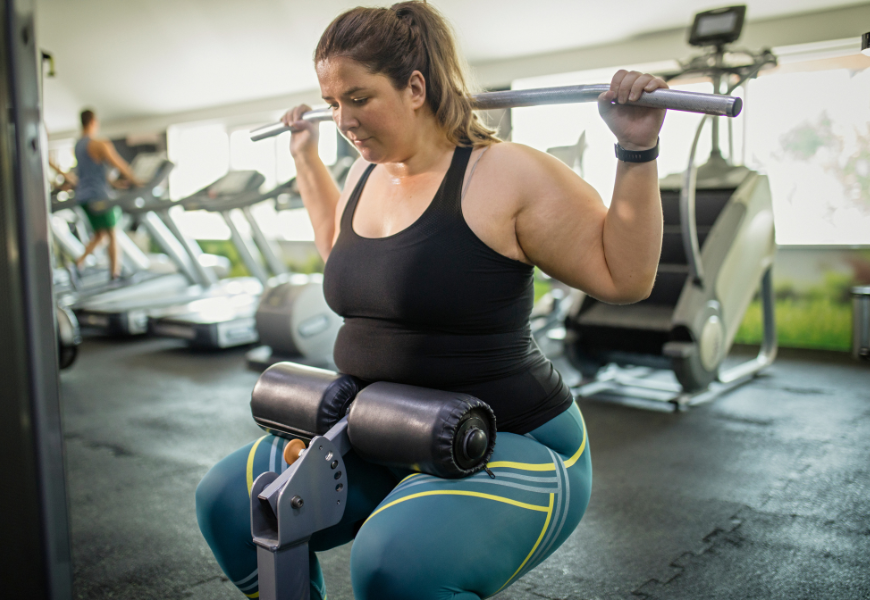
Your biggest compound movements should come at the start of your workout when you are freshest. These should also get the most rest time between sets. Squats, deadlifts, bench press and overhead press all fall into this category. Do not leave your most demanding exercise for the end when your energy is depleted.

04

Programme your accessory work carefully

Add exercises that use different muscles or movement patterns to your main lift. If you are back squatting, you generally do not need another squat variation in the same session. Instead add:

Exercise Selection Guide

  • • Bridge Movement: Hip thrust or glute bridge
  • • Single-Leg Exercise: Split squat or step up
  • • Hinge Movement: Romanian deadlift or back extension
  • • Upper Body: Mix push and pull, horizontal and vertical patterns
Programming variety across movement patterns ensures balanced development and reduces injury risk.

05

Add core work at the end

You do not have to, but core work at the end of a session is generally a good idea. Remember the core is not just your abs at the front: it is your entire torso. Include a variety of movements, for example a plank variation, an anti-rotation exercise and something that challenges spinal flexion or extension.

Programming effectively takes time to learn. Do not overthink it. Start with these principles, apply them consistently for eight to twelve weeks, then review and adjust.

Still not sure where to start?

Our PTs at Hello Fit can write you a personalised programme or review what you are currently doing. Come in for a free trial or book a PT consultation and we will build something that fits your goals exactly.

HF

Hello Fit

Programming guidance from the Hello Fit coaching team. If you want a programme built specifically for your goals, speak to one of our certified personal trainers.

More From the Blog

June 11, 2026

Workout for Beginners

Are you new to the gym? Unsure what to do? Maybe feeling a little intimidated? You are not alone — and we have got you covered. Here is a beginner-friendly workout routine to help you get started with confidence.

June 11, 2026

The Truth About Low Calorie Diets

Four-week transformation programmes and very low calorie diets are everywhere. Before you try one, here is what they actually do to your body — and why a different approach will serve you far better.

June 11, 2026

My Top 3 Deadlift Cues

The deadlift is one of the most rewarding exercises in the gym — but it can feel daunting if you are not sure where to start. Here are the three coaching cues I use most often with members who are learning or refining their deadlift.