
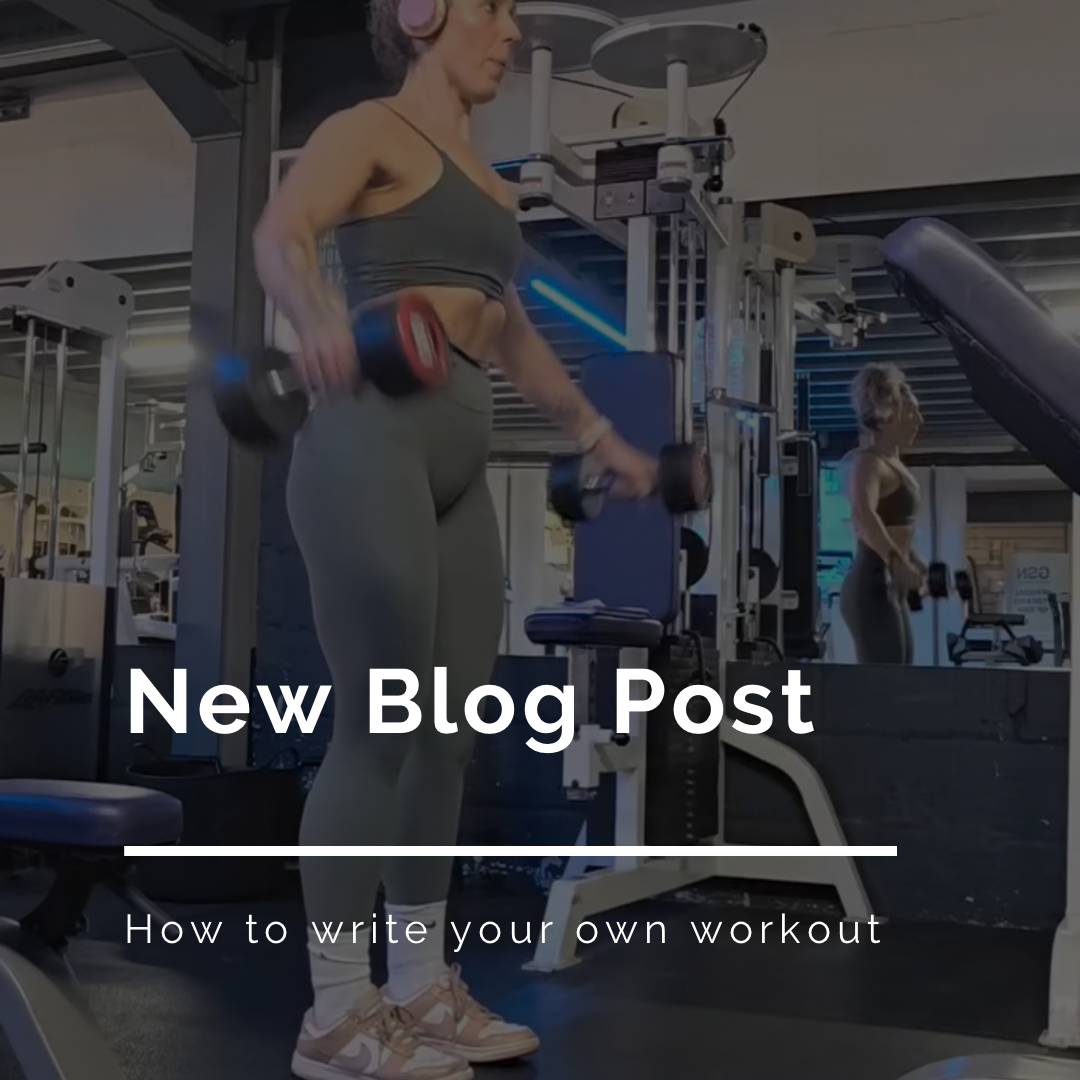
If you are unsure where to start but aren’t yet in the market to hire a PT then writing your own workouts could be a useful little skill to have. Programming effectively can be complicated but particularly if you are new to the gym, following these guidelines should help.
Here are my top tips for writing workouts.
1. Decide on the splits.
If you are doing 1 or two workouts per week you should be doing full body sessions. More than this and you can use splits if you prefer. If you train 5 or more days per week then body part splits might be for you. Personally I use: 2 sessions per week = full body, 3 sessions – 1 lower, 1 upper, 1 full body, 4 sessions – upper x2, lower x2, 5 sessions lower x3, upper x2. Ultimately it is also down to personal preference.
2. Decide on the number of sets.
If you are new to the gym 2 or 3 sets of each exercise will be enough. If you are more advanced you may do 3, 4 or even 5 sets. But what matters most is total volume. Aim for 10-20 sets per muscle group per week. This should be enough stimulus for growth. More isn’t always better – there is a law of diminishing returns!
3. Big lifts first.
Your biggest compound lifts should be at the beginning of your workout and given the most energy and generally the most rest time. Things like squats, deadlifts, bench press, overhead press can all be classed as your big lift of the day.
4. Accessory work.
Try to add other exercises that use different muscles or a different movement pattern to your big lift, particularly if you only workout twice a week. So if you are back squatting, you generally don’t need another type of squat in the same workout, instead, add a bridge movement (hip thrust, glute bridge), a single leg exercise (split squat or step up) or a hinge movement (romanian deadlift, back extension).
The same applies for upper body, program variety (push and pull – horizontal and vertical).
5. Core work
You don’t have to but I generally add core work at the end. Don’t forget the core isn’t just your ab muscles at the front but your entire torso, so ensure you add a variety of core moves such as pallof press, deadbugs and suitcase march alongside your direct ab work like sit ups.
6. Rest time matters
Depending on how heavy you lift (for you) and how close to failure you are will depend on the rest time along with the type of exercise you are performing. As a general rule, bigger lifts need 2-5 minutes rest and then accessory work less as you move down the workout. The rest time will have an impact on the amount you can lift so bear this in mind.
7. Enjoy
Lastly, don’t get too hung up on programming. Getting something done is better than nothing and as long as you’re working all your muscle groups and adding weight/reps and/or improving form each week, you will be making progress.
Happy lifting
Sarah

